
Writers: develop a tough skin (but don’t forget to moisturize)

Writing moisturizer copy Earlier this year, I wrote a column titled, Tips to combat FDAD (Fruitcake Disposal Anxiety Disorder).

Admittedly, I picked on fruitcake a little.

OK, maybe a lot.

Here’s a sample…

…Recent studies show that mild depression after the holidays is not only common but, in many cases,  the result of FDAD — Fruitcake Disposal Anxiety Disorder. On one hand, your fruitcake was a gift and therefore deserving of some measure of appreciation. On the other hand, it has already become a chew toy for the neighbor’s pit bull. This often leads to feelings of anxiety long after the holidays have ended, particularly when you see ‘Buster,’ still intoxicated with rum, struggling to dislodge the sugar loaf from his tightly-clenched jaws. So, as a service to our readers, we are offering the following self-help guide: I’m OK—You’re OK. But Give Me a Fruitcake and I’ll Kill You…”

Too strong?

Some people thought so. Continue reading Writers: develop a tough skin (but don’t forget to moisturize)
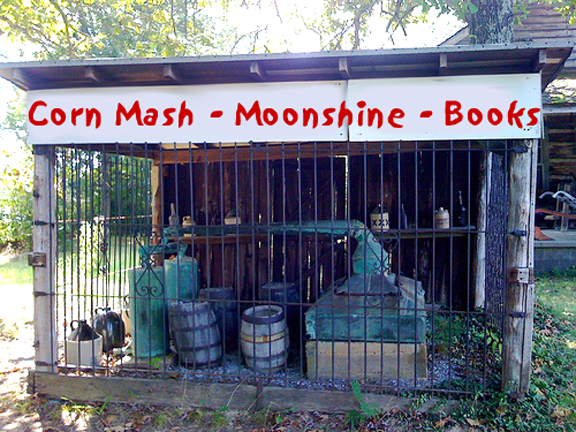
Learn to distill story ideas like a moonshiner

Moonshine books copy Ok, so let’s suppose you’ve read everything I’ve posted here or at Gliterary Girl on on the subject of writing. (And let’s also suppose you aren’t my mother.) That means you understand the importance of developing a voice, know the tools you need to establish that voice, are prepared to send your work to potential publishers, have established a writing routine, and are now sitting at the keyboard ready to write!

YEAH!

…um, but about what?

As a writer, recognizing and developing story ideas is your bread and butter. Or biscuits and gravy, depending on your proximity to the Mason-Dixon line. The point is, whether you are a romance novelist, sci-fi short story writer or weekly columnist, generating ideas — and recognizing the difference between good ones and not-so-good ones (There are no bad ideas in my opinion, and I’ll explain that in a bit) — is the most important skill you must develop. Continue reading Learn to distill story ideas like a moonshiner

Forget about Bruce Jenner and start writing

write write write copy (Note: this is part of a weekly series of columns from Gliterary Girl, where I’m a contributor on the subject of writing. Why? Your guess is as good as mine. But possibly more insightful…)

Last week, I ended my column with the title for this week’s topic:

Step one to being a writer: Write!

That advice seems pretty straight forward. The kind of obvious straight forwardness that carries you with complete confidence toe-first into a brick. Like most advice we’re given, the wisdom behind it is simple; the problem comes in the execution.

And while there are countless books out there offering tips on everything from how to get inspired and avoid writer’s block to the kinds of foods that promote creative thinking (which, judging from what I read, you will be doing mostly while on the commode), all of those books essentially come down to one universal truth:

Nothing promotes and stimulates writing better than…

You guessed it:

Excessive drinking.

But let’s suppose you don’t want to become an alcoholic? Does that mean you’re not truly committed to being a writer? Could it jeopardize your dream of becoming a novelist, columnist, short story writer or inner city tagger? Continue reading Forget about Bruce Jenner and start writing

Like exercise, regular writing can shape your (literary) thighs

Bike typewriter copy Last week, in my continued saga at Gliterary Girl on the hazards rewards advantages realities of being a writer, we spoke about some of the tools you need to develop your writing “Voice.” This week, we’re going to talk about making regular use of those tools by establishing a writing “Routine.”

In a way, establishing this routine is a lot like going to the gym. Except that you don’t get sweaty, never leave a seated position and, unless you write romance or erotica, you probably won’t increase your heart rate much.

But aside from that, it’s just like going to the gym.

When I first started writing in an actual newsroom, my routine consisted of sitting at my desk, staring blankly at the screen and banging on my keys as quickly as possible until it was time to go home, where I would do my actual writing.

Why did I do this? Continue reading Like exercise, regular writing can shape your (literary) thighs

Finding your writing ‘voice’ (Unless you’re William Hung)

Typewriter at mic (Note: This is part of a weekly series from the website Gliterary Girl, where I’m a regular contributor on the subject of writing. And highly suggestive quilting patterns. But mostly writing.)

There are nearly 8 billion people inhabiting the earth. Most are capable of stringing together a sequence of words in order to communicate an idea or feeling.

Occasionally, this even includes lawyers.

At this very moment, if you were to log on to any social network, you’d find thousands of people writing about any number of topics, including vacations, sex, parenting, mental illness…

Hmmm. Looking back over that last sequence, I see a definite pattern.

Anyway, with all of these people writing, what determines the difference between someone who writes and a writer?

There really is a difference and, as with any art form, deciding between “good” and “poor” writing comes down to personal taste and interpretation. Or possibly an interpreter if you’re reading Ozzy Osbourne’s biography.  Continue reading Finding your writing ‘voice’ (Unless you’re William Hung)